Hannah Arendt Initiative
We are a network of civil society organizations that, at the initiative and with funding from the German Federal Foreign Office and the German Federal Government Commissioner for Culture and the Media (BKM), protects and supports journalists from Ukraine, Russia, Belarus, Sudan and Central America and other countries who are under threat as they conduct their important work.
Among the Hannah Arendt Initiative projects are training measures, regional scholarship programs and exile journalism centers in countries abroad as well as corresponding measures for journalists living in exile in Germany.
Partners in this protection program include DW Akademie, the European Fund for Journalism in Exile (JX Fund), MiCT – Media in Cooperation and Transition, and the European Centre for Press and Media Freedom (ECPMF).
The program is committed to state neutrality. Funding is based solely on unbiased criteria and independent juries free of state influence.
News from the projects
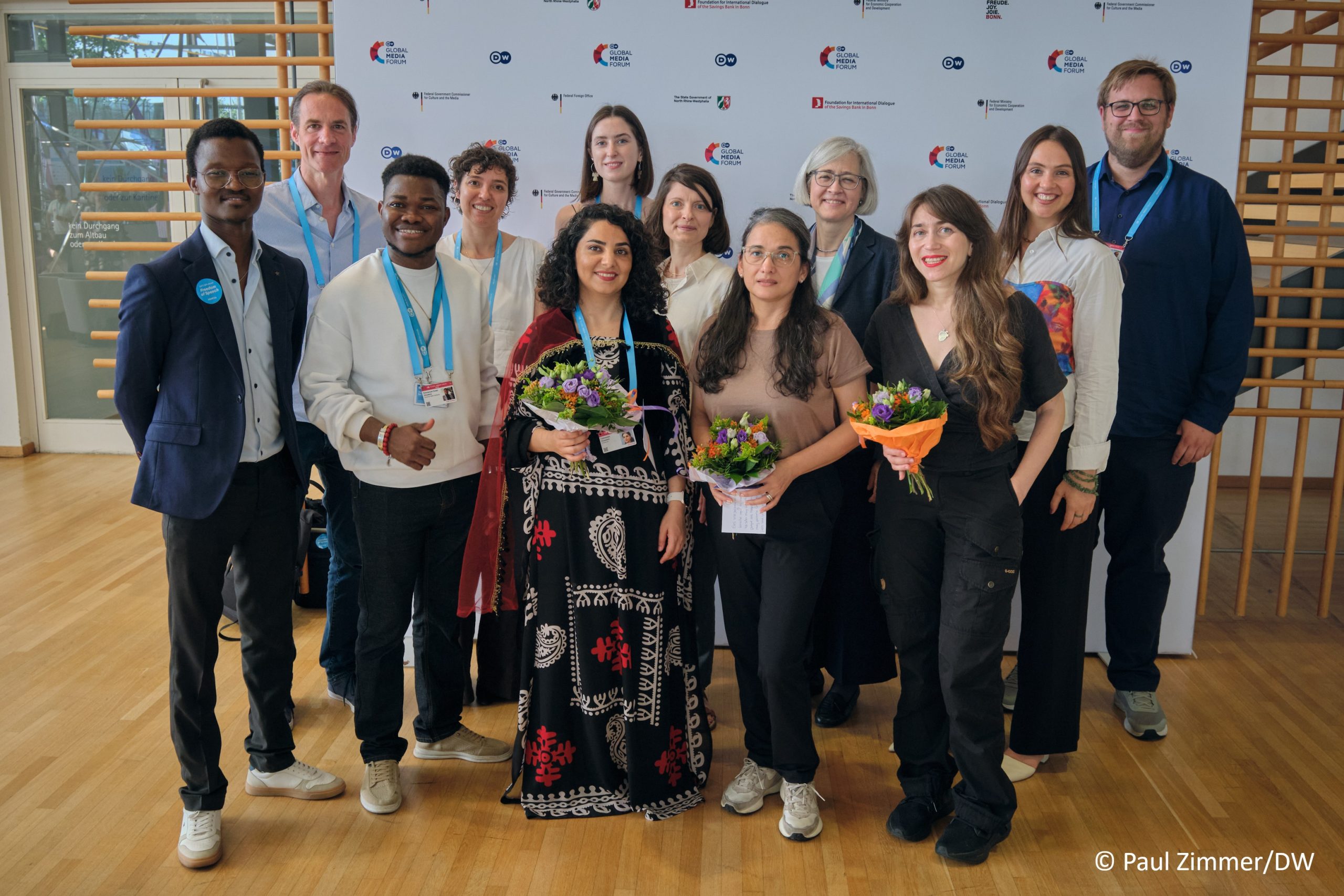
The Price of Telling the Truth: Four Journalists Speak Out
During the Global Media Forum 2026, four journalists supported by the Hannah Arendt Initiative offered rare and deeply personal insights into the sacrifices they have made to continue their work despite threats to their safety and freedom.
Coming from Ukraine, Nicaragua, Iran, and Russia, they shared how resilience and reinvention have become essential tools for journalists around the world.
JX Fund and The Fix: “Panorama of exiled independent media”
This new report examines exiled media worldwide, identifying common causes, challenges, and perspectives across exiled media communities. As political conditions reshape journalism globally, exile journalism has become a rapidly evolving field.
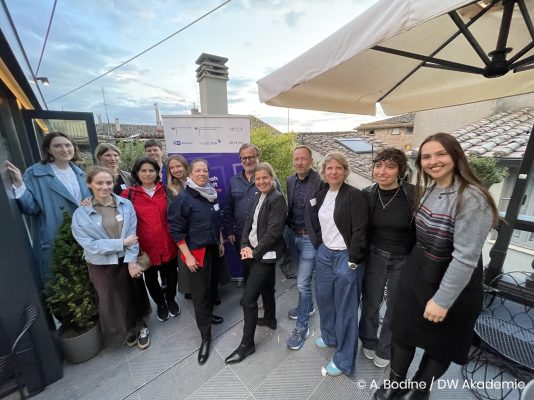
Opening reception and partner panels at #IJF26
At the International Journalism Festival in Perugia (#IJF26), the Hannah Arendt Initiative brought network partners, affiliates and interested journalists together at its opening reception. The Initiative’s work was also reflected in multiple partner panels, available to watch on demand.
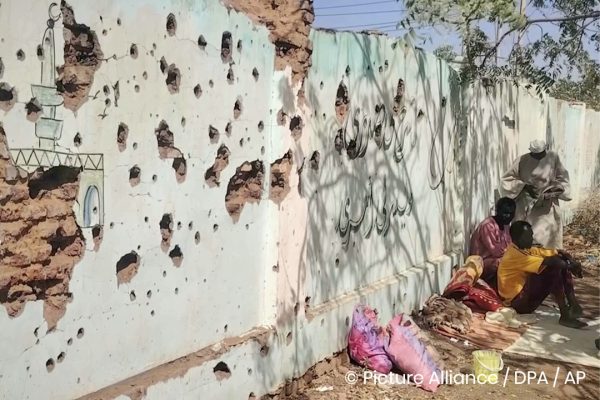
MiCT: Sudan’s war through the eyes of journalists
For three years, Sudanese journalists have reported under life‑threatening conditions on war, displacement and the collapse of the country’s media landscape. They bear witness to violence and forced flight, pushing back against propaganda with independent reporting – from exile if necessary.
Here you will find articles by Sudanese reporters, all MiCT fellows.
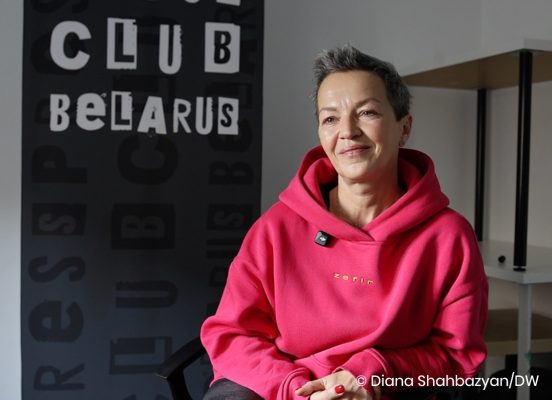
Rebuilding freedom: A Belarusian journalist’s new start
After years in prison, a Belarusian journalist rebuilds her life in exile. Supported by Space for Freedom, implemented with the Belarus Press Club and DW Akademie, her story shows what matters after being released: psychological support, as well as legal and financial assistance.
News from the partners
Rethinking impact: What exiled media can – and cannot – achieve
Working across borders and under constant pressure, exiled media challenge conventional ideas of impact. Insights from discussions in Hamburg and Perugia reveal a broader perspective – beyond reach, visibility and short-term results.

World Press Freedom Day 2026: Serbia’s spiral of violence
The role of the European Union regarding Serbia’s deepening media freedom crisis was addressed in a webinar by the Media Freedom Rapid Response (MFRR). It highlights how systemic pressures are driving a cycle of violence, intimidation and impunity. MFRR is a Europe-wide mechanism implemented by ECPMF and its partners.
DW Freedom of Speech Award 2026 goes to Jimmy Lai
Media entrepreneur Jimmy Lai receives the 12th DW Freedom of Speech Award. The founder of the newspaper Apple Daily, who has been detained in solitary confinement since 2020, is a prominent advocate of press freedom and democracy in Hong Kong.
DW Akademie supports Ukrainian journalists
Four years into the full-scale war, DW Akademie and its partner Suspilne are taking an approach that looks to Ukraine’s future: the public broadcaster is producing content for kids and teens. DW Akademie’s Media and Information Literacy projects help young people counter mis- and disinformation.

“If you don’t support exile media, it will disappear”
Meduza is Russia’s largest independent media outlet, operating from exile since it was founded in 2014.
DW Akademie spoke with editor-in-chief Ivan Kolpakov about the unique challenges of reporting under these conditions.
Projects
DW Akademie: Space for Freedom
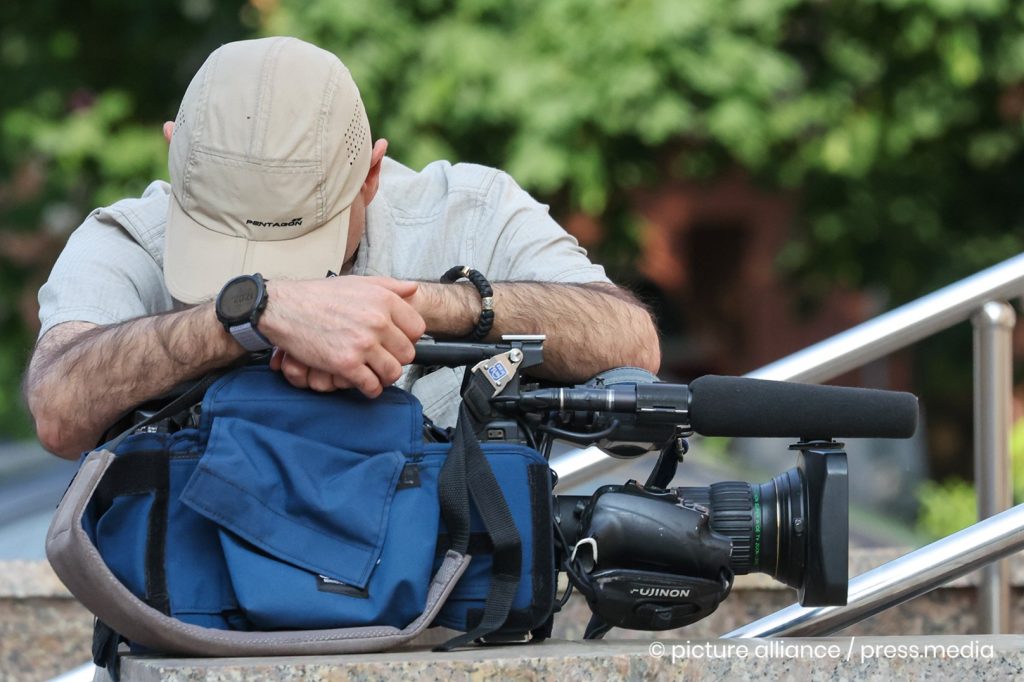
Through the project Space for Freedom, DW Akademie and local partner organizations are helping create new perspectives for journalists and media working in exile.
The project is aimed at exiled journalists originally from Belarus, Russia and Central America. It is also developing structures and creating resources to enable exiled journalists and media outlets to continue to report critically.
More information
Projects
European Centre for Press and Media Freedom: Voices of Ukraine
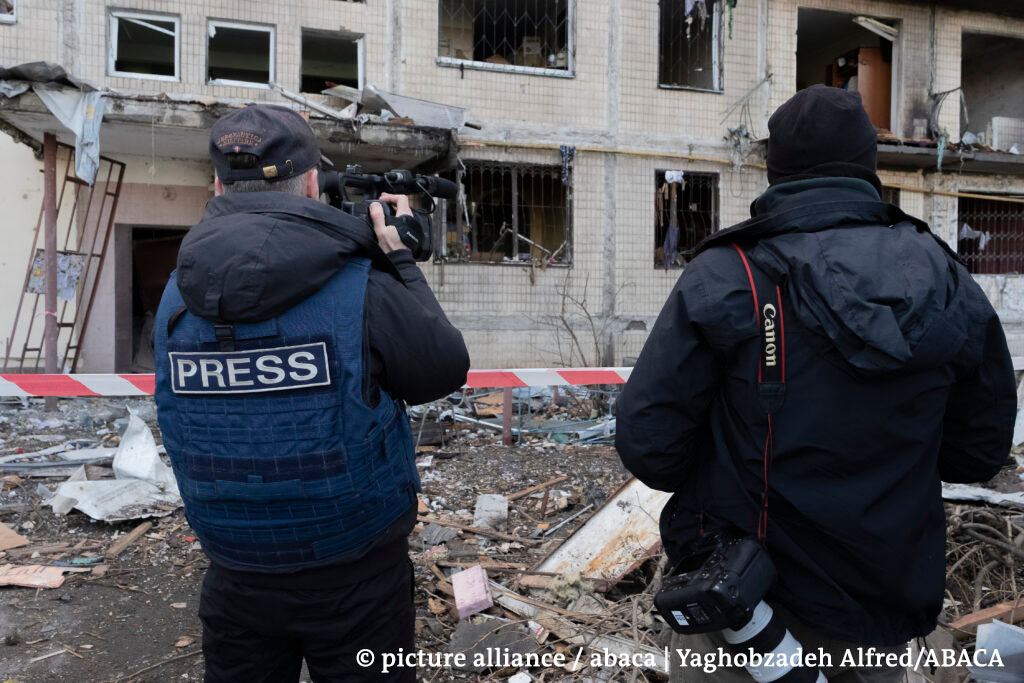
The European Centre for Press and Media Freedom (ECPMF) has been supporting Ukrainian media since the beginning of the full-scale invasion to ensure the continuous work of journalists and contribute to strengthening independent journalism.
The Voices of Ukraine program offers support through emergency grants, technical assistance, insurance for journalists on the front line, training, short-term and long-term residencies, special support for female journalists, and publication support.
More information
Projects
JX Fund: Rebuilding editorial structures in exile
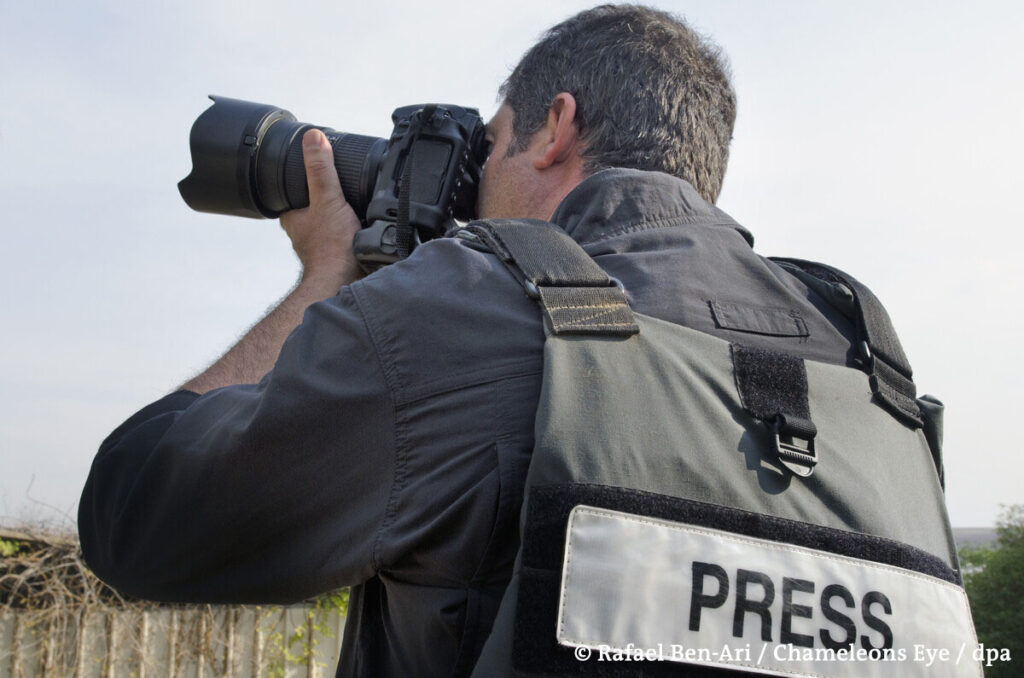
The JX Fund is helping media workers quickly and flexibly to continue their work after they have fled war and crisis zones. It aims to strengthen independent media in exile beyond a current phase of high attention and to support the building of sustainable media outlets accessible for their home countries.
More information
Projects
Media in Cooperation and Transition: Critical Voices Fellowship
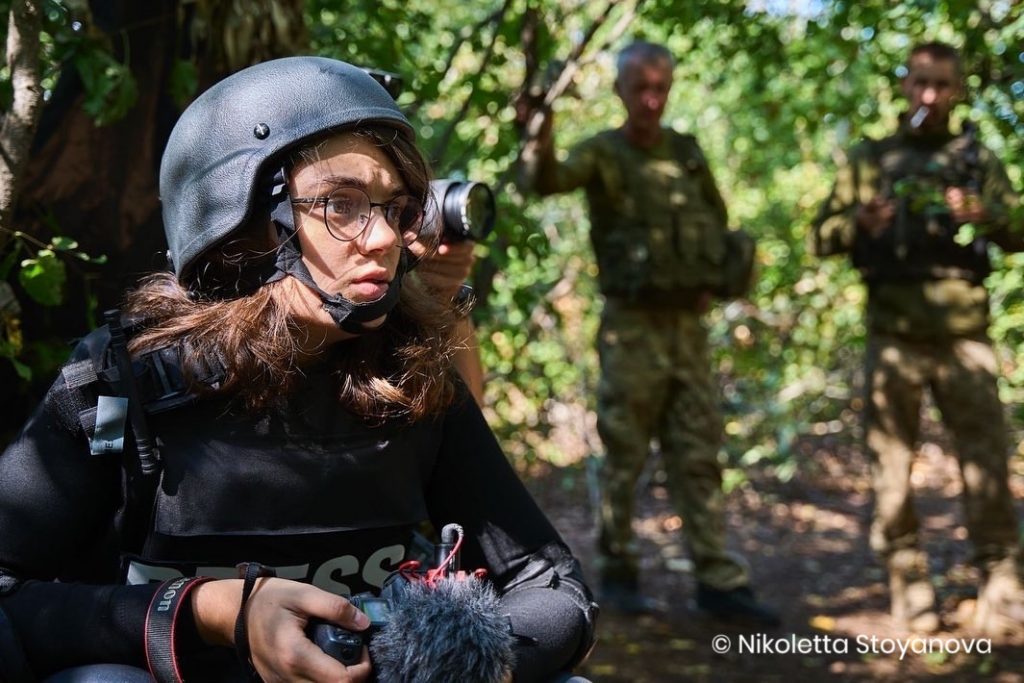
The MICT Fellowship for Critical Voices is aimed at media professionals from war and crisis regions who are acutely threatened by political persecution, censorship or discrimination in their home countries. This year, the initial focus is on supporting media professionals from Afghanistan, Belarus, Russia, Myanmar and Ukraine.
The Fellowship is intended to provide media professionals with quick and uncomplicated support, initially until the end of the year, so that they can safely pursue their valuable work and continue to inform the target groups in their home countries.
More information
Meet the Hannah Arendt Initiative
Photo Exhibition of the Open Eye Award
MiCT Roof, Brunnenstraße 9, 10119 Berlin-Mitte (courtyard, 5th floor)
The award honors exceptional photojournalism from crisis and conflict regions. The photographs on display were taken by fellows of the MiCT Fellowship for Critical Voices, including journalists from Ukraine, Georgia, Palestine, Syria, and Myanmar. The Fellowship is a protection program for media professionals at risk in war and crisis zones and forms part of the Hannah Arendt Initiative.
Panel Discussion at Café Kyiv – “Frontline Journalism: How Local Media Defends Democracy Under Fire”
23 February 2026, Colosseum Berlin
Organized by ECPMF, this event highlights the role of local and regional Ukrainian media under wartime conditions—particularly in countering disinformation, fostering trust, and maintaining democratic discourse despite significant security and resource constraints.
Panel Discussion and Q&A “Crises in Context: How Exiled Journalists Help Safeguarding Information Across Borders”
10 March 2026, 6:00 p.m., Publix, Hermannstr. 90, 12049 Berlin
The JX Fund invites to an evening discussion on the role of exiled journalism in times of political crises and societal upheaval.
Registration: https://forms.gle/fhQaFGqWyUizbSV48
Speakers:
- Gabriela Ramirez (Venezuela) Investigative Journalist, Unbias the News / Hostwriter
- Koumay Al-Mulhem (Syria) Editor-in-Chief, Khatt30.com
- Journalist and Author, Amal, Berlin!
Moderation: Christian Mihr, Managing Director for Policy and Strategy of Reporters Without Borders (RSF Germany)
Panel “Journalism in Exile” at the Walter Benjamin Week
16 March 2026, 7–9 p.m., Goethe-Institut Barcelona
The Walter Benjamin Week 2026, organized by the German Consulate General in Barcelona in cooperation with the Goethe-Institut Barcelona, will take place under the motto “Thinking Means Setting Sail” – Art and Communication in the Digital Age.” In the panel discussion on journalism in exile, Johannes Metzler, Head of the Coordination Office of the Hannah Arendt Initiative, will speak.
Speakers:
- Johannes Metzler (Hannah Arendt Initiative)
- Alfonso Bauluz (President, Reporters Without Borders Spain)
- Sasha Molotkova (Lecturer, Abat Oliva CEU)
- Arsenio Rodriguez Quintana (Essayist, Historian)
Moderation: Linda Osusky (Journalist)
Meet the Hannah Arendt Initiative @ Perugia
15 April 2026, Perugia, Hotel Priori Secret Garden
Join us for an informal evening of networking, drinks, canapés, stunning views, and inspiring conversations.
We will begin with a brief introduction to the Hannah Arendt Initiative, followed by four concise project spotlights that highlight the tools, insights, and learnings from our global work supporting and protecting journalists. Together, these perspectives reflect the core mission of the Initiative: strengthening the safety, resilience, and independence of journalists worldwide.
For participation inquiries: info@hannah-arendt-initiative.de
Lviv Media Forum 2026 – “Reality Under Attack: Flight, Freeze, or Fight?”
14–16 May 2026, Lviv, Ukraine
The Conference will once again bring together Ukrainian and international media professionals, public intellectuals, researchers, policymakers, and representatives from the public sector and international organizations to openly discuss the challenges facing media and society today.
The Lviv Media Forum is supported by ECMF, a partner of the Hannah Arendt Initiative.
Behind the Story: Exile Edition
A live storytelling show with insights from exiled journalists at the DW Global Media Forum 2026
23 June 2026, World Conference Center Bonn
The DW Global Media Forum 2026 will take place on 23 and 24 June under the theme “Journalism out loud” in Bonn. With a creative storytelling event, the Hannah Arendt Initiative will spotlight the threats faced by media professionals worldwide. Conference registration opens on 1 April.
Partners


Donors