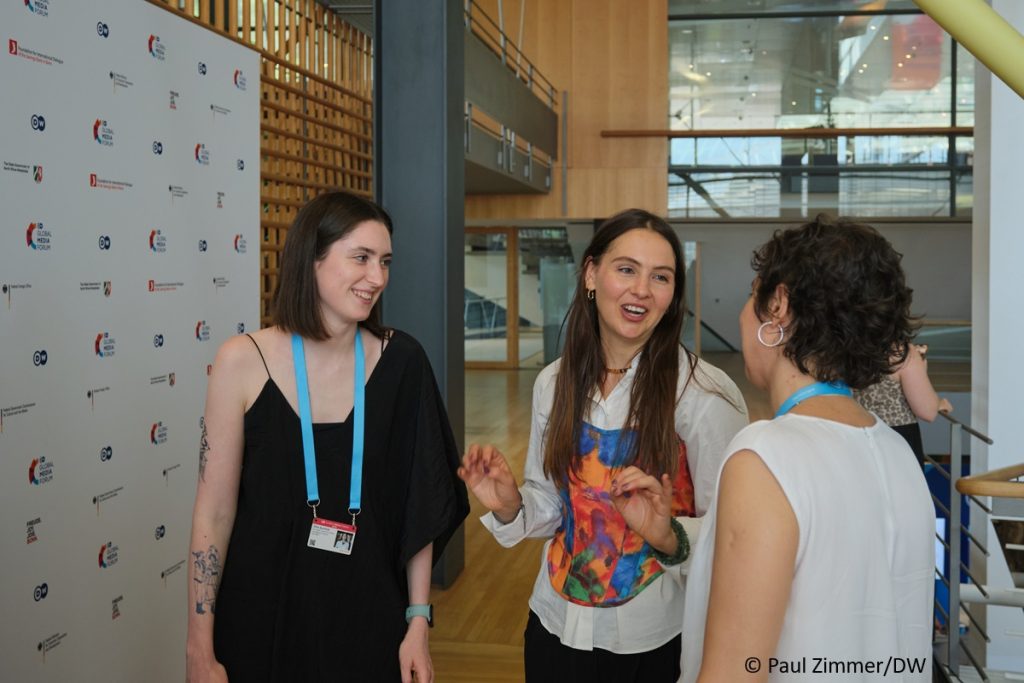
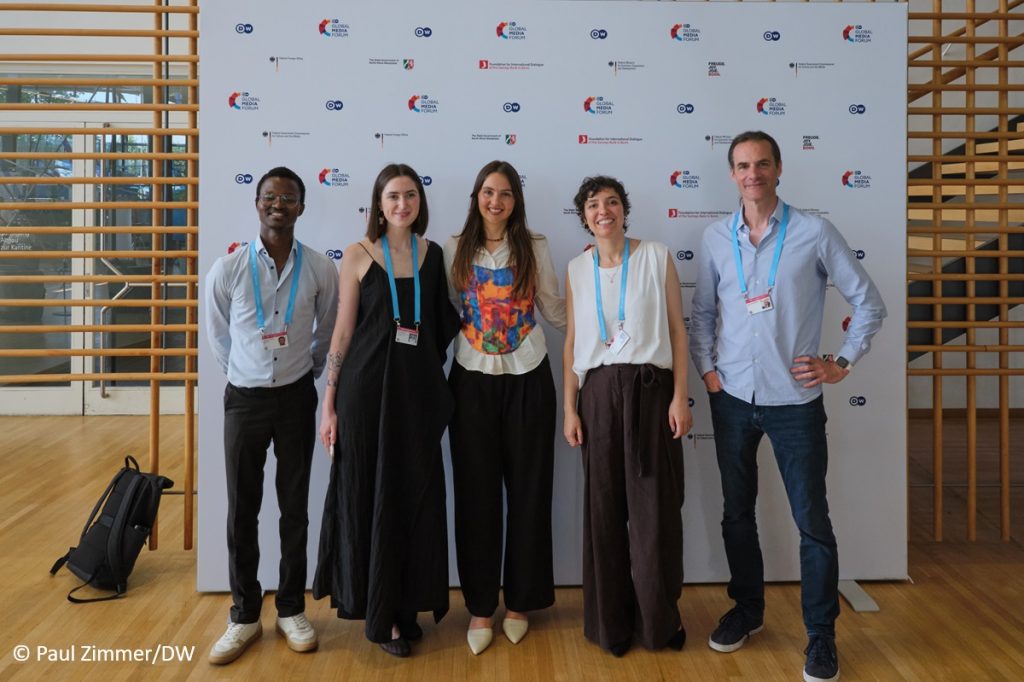
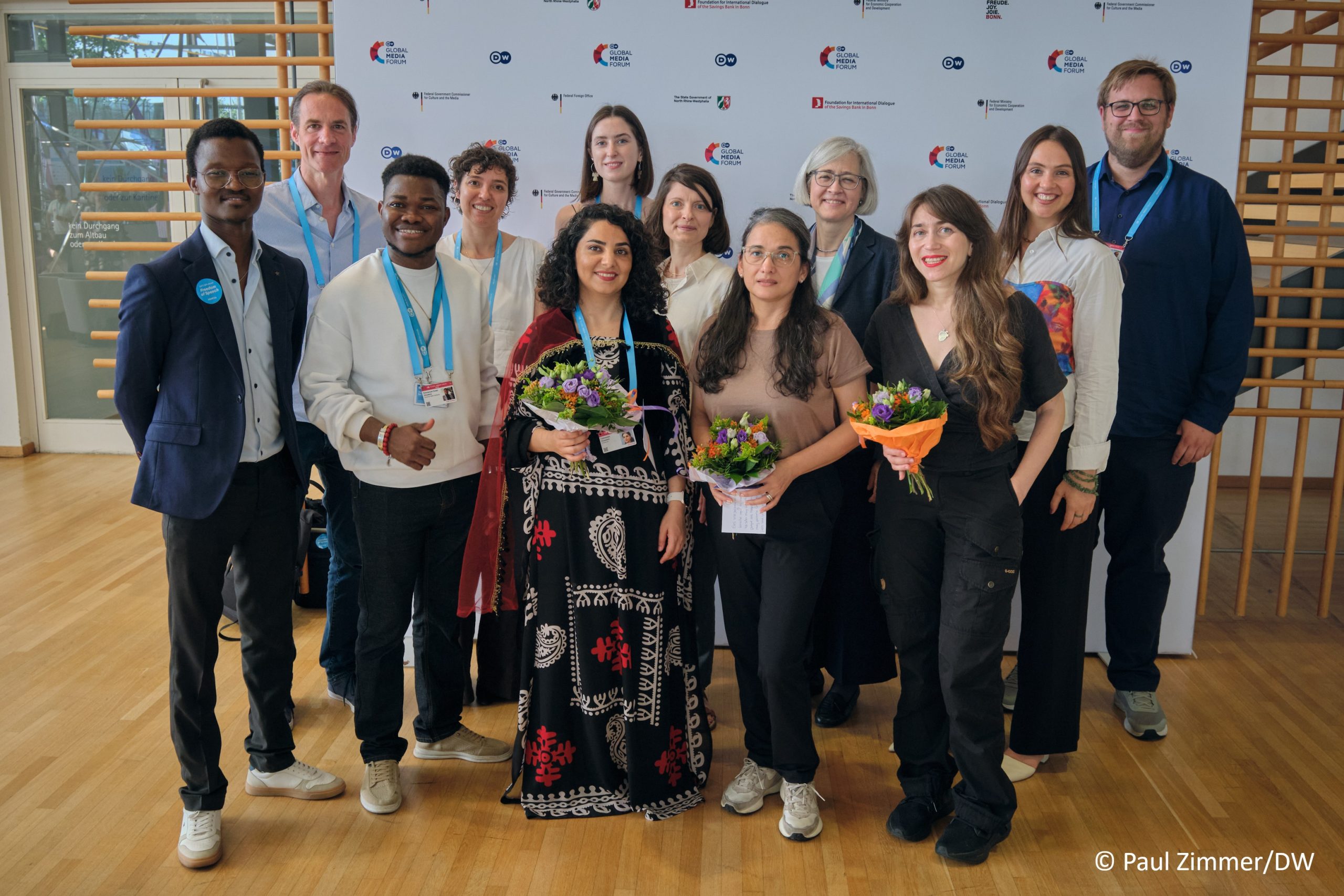
What happens when reporting the news puts your freedom, safety, family or future at risk? At the 2026 Global Media Forum, four journalists supported by the Hannah Arendt Initiative shared first-hand accounts of censorship, threats, displacement and survival. Coming from Ukraine, Nicaragua, Iran, and Russia, they demonstrated that as conditions for independent journalism become increasingly hostile around the world, resilience and reinvention are as essential as professional rigor.
By Emmanuel Dulac Houssou and Lena Gamper
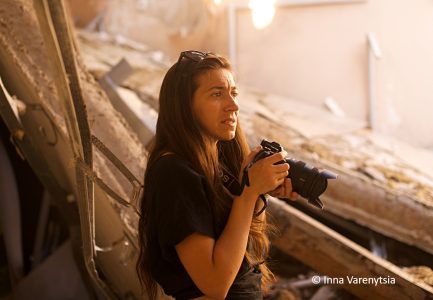
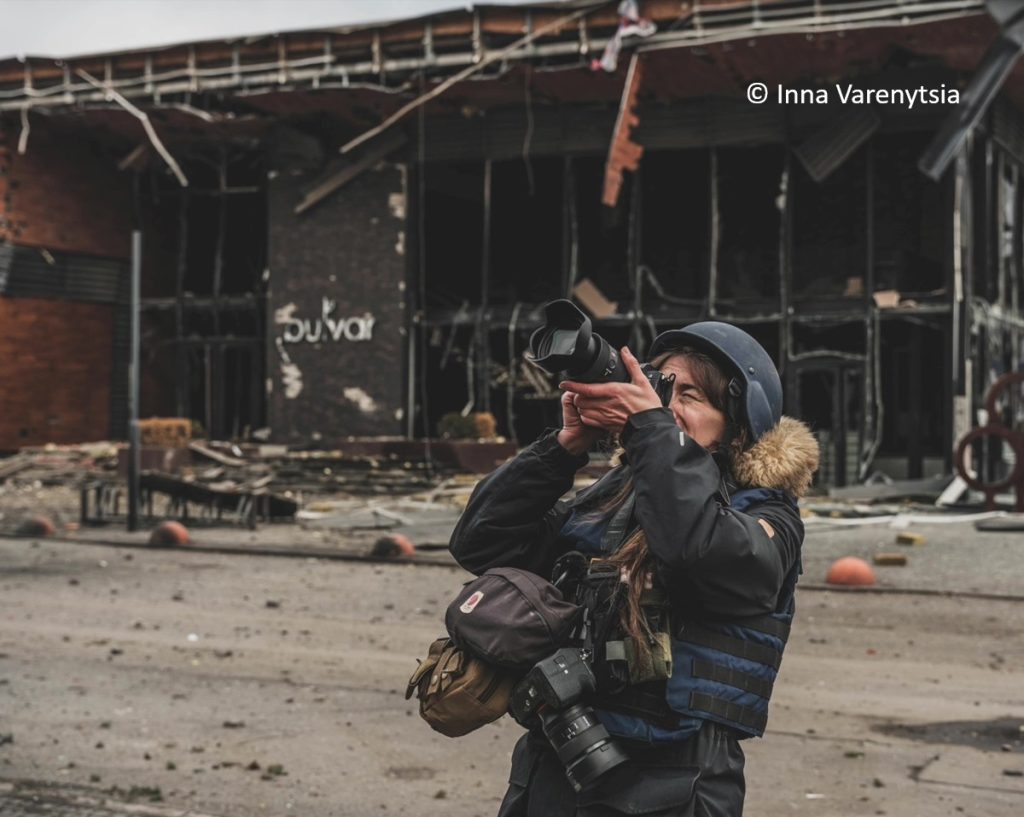
Inna Varenytsia | Ukraine
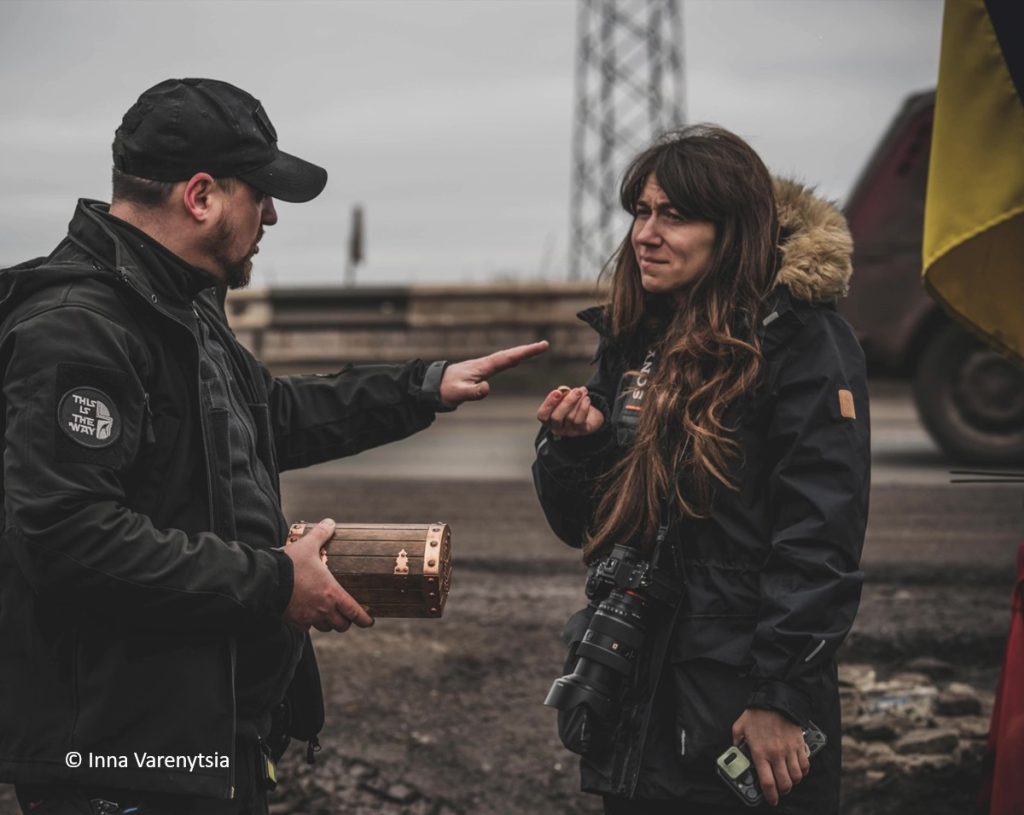
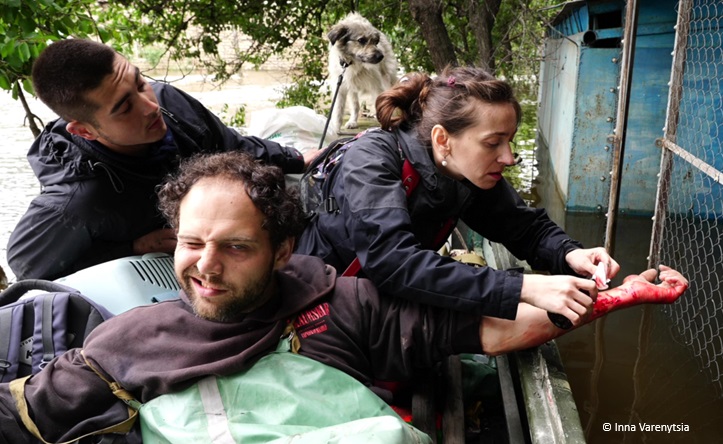
Being a woman and a journalist on the war’s frontline
Inna opened her presentation with “People Are Strange” by The Doors (1967). It speaks of alienation and disorientation.
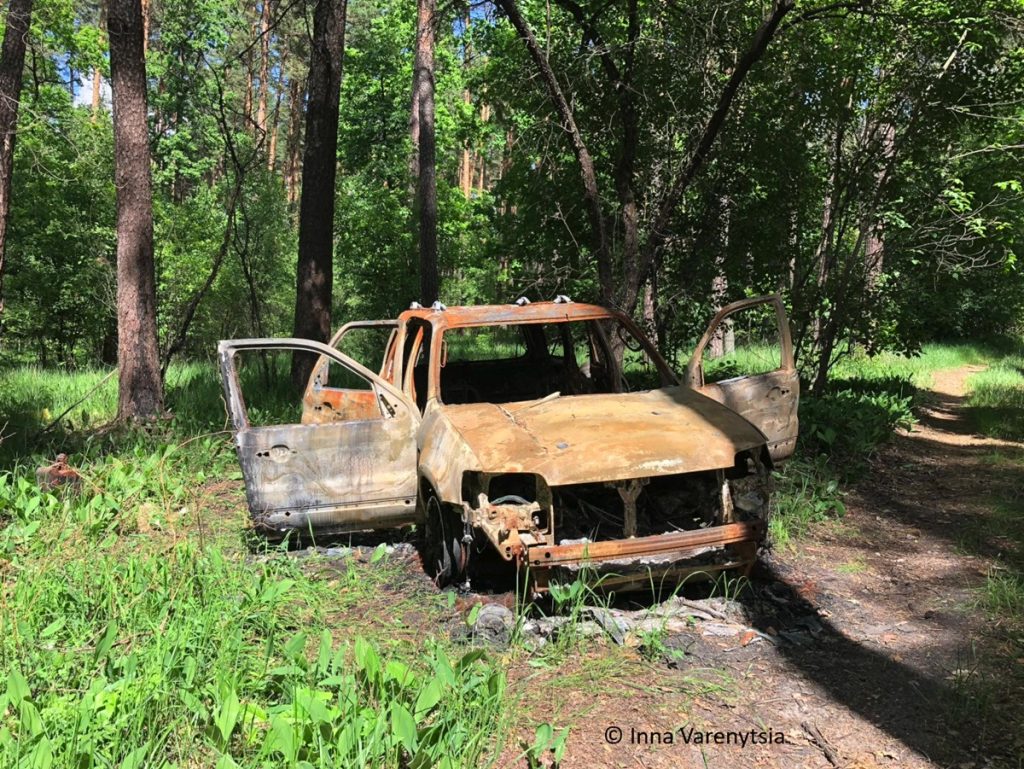
This song was the only tape working in the old car she used to drive to the frontline. She grew tired of it, given how many times she set out for the front.
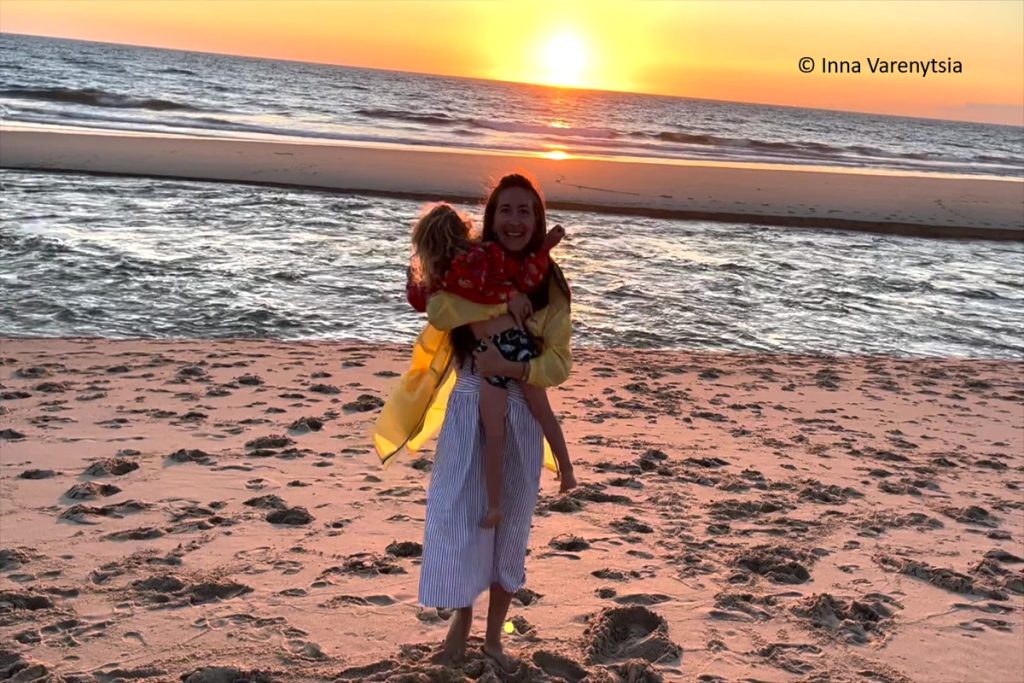
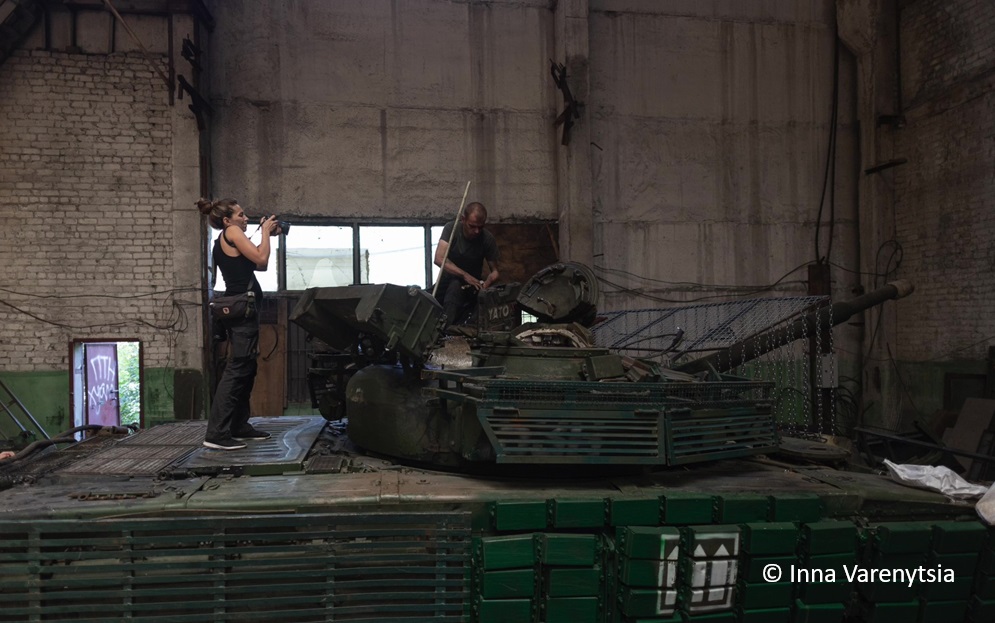
A war correspondent since the first day of Russia’s full-scale invasion in 2022, Inna lives in a reality where airstrikes mark the hours and death is a familiar presence. But the place that once grounded her has been taken. Her parents’ home is now under occupation, and she can no longer visit.
It feels like I’ve become exiled inside my own country,” she reflected, describing the pain of not being able to speak freely with her family.
Alongside this personal rupture, she described what it feels like to navigate the frontline as a woman.
“Although I don’t feel it, I must project confidence when addressing officers,” she said. “Otherwise, I won’t be respected, taken seriously, or even allowed through; in those moments, my sense of mission replaces fear.”
Her work is an anchor. She was nominated, together with a Colombian-Ukrainian team, for the 2026 Gabo Award for her documentary Behind the War (Detrás de la guerra). In it, she documents the lives of those defending Ukraine, including Colombians who joined the fight. The award celebrates the best journalism in Latin America.
For Inna Varenytsia, reporting the war is a way to prevent it from becoming abstract. She received crucial support from the European Centre for Press and Media Freedom (ECPMF), a partner of the Hannah Arendt Initiative. Their expertise lies in providing Ukrainian journalists with specialized support, including practical assistance such as insurance — something many frontline reporters would otherwise not have access to.
Lucía Navas | Nicaragua / Exile in Costa Rica
When your state decides you no longer exist
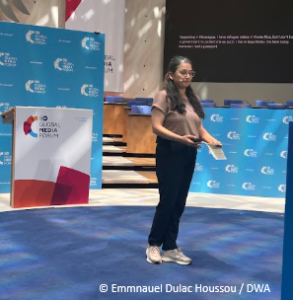 Lucía begins with a simple gesture: “Take out your ID card. Look at it. It tells you that you exist.” Then she adds: “I cannot show you mine. The dictatorship erased my name from the civil registry. I no longer exist officially.”
An investigative journalist for more than fifteen years, Lucía was stripped of her citizenship by Nicaragua’s Ortega-Murillo regime. Her passport was confiscated. Her name was deleted. Her legal existence was erased. But her profession did not disappear.
“They took my documents, but not my story,” she said. “I am still Nicaraguan. I am still a journalist.”
From exile, she investigates a surveillance system that turns every home into an intelligence post. With the support of DW Akademie she published the investigation called Vigilancia y represión casa por casa (Door-to-door surveillance and repression), in which she shows how public employees, doctors, and census workers become instruments of political control.
She describes how “community visits” are used to interrogate, monitor and intimidate. Families are questioned about their income, their movements, their visitors, their traveling. Phones ring with messages like: “We passed by your house, and you weren’t there. Where are you?”
Lucía explains that this surveillance can become a legal weapon: being labeled a “traitor to the homeland” can lead to 30 years in prison, confiscation of property, denationalization as in her case, or worse.
But even in exile, she’s not safe. According to the United Nations Group of Human Rights Experts on Nicaragua (GHREN), exiled Nicaraguans are systematically targeted beyond the country’s borders. The 2025 report documents a pattern of “transnational human rights violations” including surveillance, harassment, and physical violence abroad. (GHREN, “Nicaragua: Persecution Beyond Borders”, 23 September 2025). This aligns with independent monitoring by exile organizations which have recorded at least a dozen killings and attempted killings of exiled Nicaraguan dissidents and opposition figures since the 2018 government crackdown, confirming that exile is no longer a guarantee of safety.
In this context, the Hannah Arendt Initiative’s support, especially the safe working and support space offered by the DW Akademie, has been essential for Navas. It gives her both security and connection to other journalists in the same situation.
Azhin (Fahmideh) Hosseini | Iran
Marked for Death Because She Reported the Truth
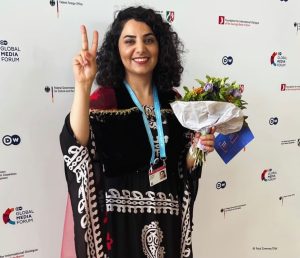
“My official name is Fahmideh. But I ask you to call me Azhin. It is my Kurdish name.” These simple sentences bring silence to the room.
Azhin explains how families give their children Kurdish names, but the Iranian regime doesn’t accept those so they need a second official name.
Azhin worked as a reporter in “Kurdchannel“, a Kurdish media outlet in Iran. She described reporting on Jina Amini (known as Mahsa Amini), a 22‑year‑old Iranian woman whose death, following her arrest by the morality police in 2022, sparked a massive wave of protests across Iran. Azhin covered the movement that emerged in the wake of Amini’s death, documenting personal stories and exposing human rights abuses. Her reporting made her a target of the regime, and she still vividly remembers the day drones struck her media outlet.
Today is the tenth day of protests. Twenty people have been killed in Kurdish cities. Hundreds more have been arrested and wounded. At least fifty-two women have been detained. These protests started after the state killed Mahsa Amini.
Azhin was typing this sentence when her workplace at the “Kurdchannel” in the Kurdish region of Iran was directly targeted by a missile and drone attack launched by the Islamic Republic. She did not know whether her husband, working in another office, was alive. She lost a close friend in the attack, a pregnant woman whose baby survived only 24 hours.
Then came the execution threats. Photos of her and her husband were published. They escaped to Turkey together. But what was hoped to be their safe haven ended in a Turkish detention center where guards subjected them to cruel treatment.
She recounts how she was pressured by Turkish authorities to sign deportation papers to Iran just to see her husband. How she was transferred to a high-security block. How she was escorted to the German consulate by nine armed police officers.
Thanks to Media in Cooperation and Transition (MiCT) and the Hannah Arendt Initiative, she obtained a humanitarian visa to Germany. “Without this support, we might have been two more names on an execution list.”
One of her cellmates in the detention center who she had to leave behind told her: “Be our voice out there”. Today from exile, she is.
Anonymous | Russia / Exil
Independent journalism as a space of freedom
What do you do when your country starts a war? In this situation, media storytelling requires reinvention.
This is the story of a Russian media manager making difficult decisions. Forced into exile due to Russia’s repression of independent media which do not align with what is happening in Ukraine, the independent media outlet she leads had to redefine its own identity. Instead of shifting to breaking news about the war, they decided to stick with what they are good at: in‑depth investigative reporting combined with engaging storytelling.
So, though not working for a war-reporting outlet, she still contributes to the critical voices from exile in her trademark way and explores the roots of violence in Russian society: education, obedience, normalized authority, imposed silence.
Many Russians are opposed to the war but cannot speak out loud. They risk imprisonment, physical violence and abduction. Even though she is in exile she remains at risk and has therefore requested that her name and identity not be disclosed.
Those who cannot protest listen to us in secret. Our stories become their voice.
Her media outlet has become a symbolic refuge for an audience scattered across borders and often silenced.
The independent media outlet has been supported by JX Fund – European Fund for Journalism in Exile. JX Fund supports independent media in exile with funding that helps them continue producing independent journalism and to rebuild their operations.
What Their Stories Reveal About “Journalism under threat”
The testimonies shared during our session show that journalism in authoritarian and war contexts is no longer defined only by reporting, but by surviving, adapting and rebuilding. Each of the four speakers shed light on a different aspect of what it means to provide the public with rigorous, fact-based reporting in a world where repression crosses borders and newsrooms themselves become targets.
Structural pressure often turns into an existential experience: navigating military checkpoints with forced confidence, rebuilding a career and family life from scratch after displacement, reporting under missile attacks, or documenting a war over many years. These experiences highlight that journalism has become both more fragile and more essential. Journalism today requires new forms of protection and solidarity. Protection programmes must also find new ways to acknowledge and address trauma, precarity, and transnational threats.
Behind every testimony, the same determination is apparent: to continue doing good journalism even when the conditions are being reshaped by conflict, surveillance and exile. These stories remind us that protecting journalism in 2026 means protecting the people who carry it, their safety, their dignity and their ability to keep telling the truth.
The Hannah Arendt Initiative is committed to continuing its mission to safeguard journalists and their families, working through its four partners: the European Centre for Press and Media Freedom (ECPMF); the European Fund for Journalism in Exile (JX Fund); MiCT – Media in Cooperation and Transition; and, DW Akademie. Together, they provide protection, resources, and solidarity to those who refuse to be silenced. Their work ensures that, even in the darkest circumstances, journalism endures and so do the voices of those who carry it forward.